Very few places in Ireland receive as much sunlight as Waterford. That single fact changes the arithmetic on every quote we write between Lismore and Tramore, because a modest array here does the work that a larger one would have to do further north and west.
The county also gives us good ground to build on. Deep alluvial and brown earth soils along the Blackwater take a driven pile as well as anything in Munster, and rural sites from Portlaw out to the coast are generally large enough to place a frame properly rather than squeezing it in beside a boundary.
The sunlight figure, and what it is actually worth
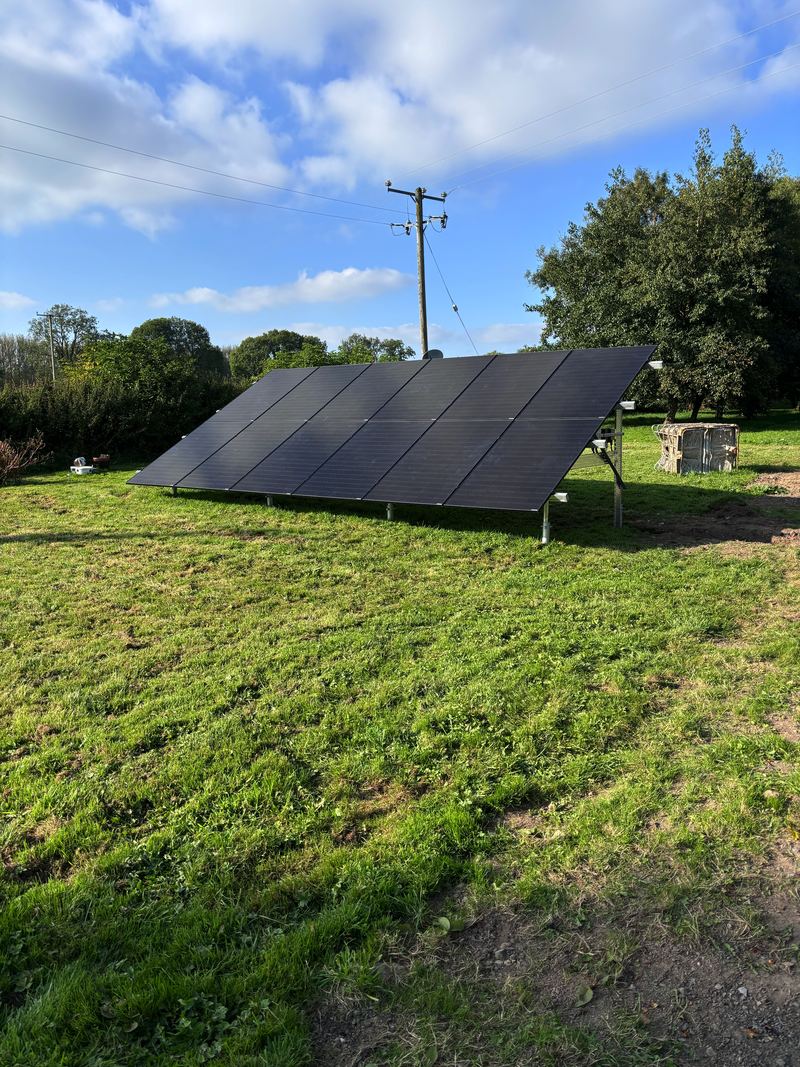
Waterford records around 1,060 kWh per square metre of horizontal irradiation in a typical year, which ranks it inside the top three counties in the state. A ground-mounted array here, pitched between 30 and 35 degrees and aimed at true south, is expected to deliver roughly 965 kWh per kWp per year.
Set that against the national picture. Irish ground mounts generally land between about 850 and 1,000 kWh per kWp depending on county, tilt and shading, so Waterford is at the top end of that range rather than the middle of it. A 6 kWp array in Dungarvan is doing meaningfully more work than the identical 6 kWp array on a Donegal hillside.
The knock-on effect is on sizing. Because each kWp here earns its keep faster, customers frequently end up choosing a slightly larger array than they first had in mind, since the incremental panels still pay their way rather than just filling space.
Roof compromise versus a clean south-facing frame
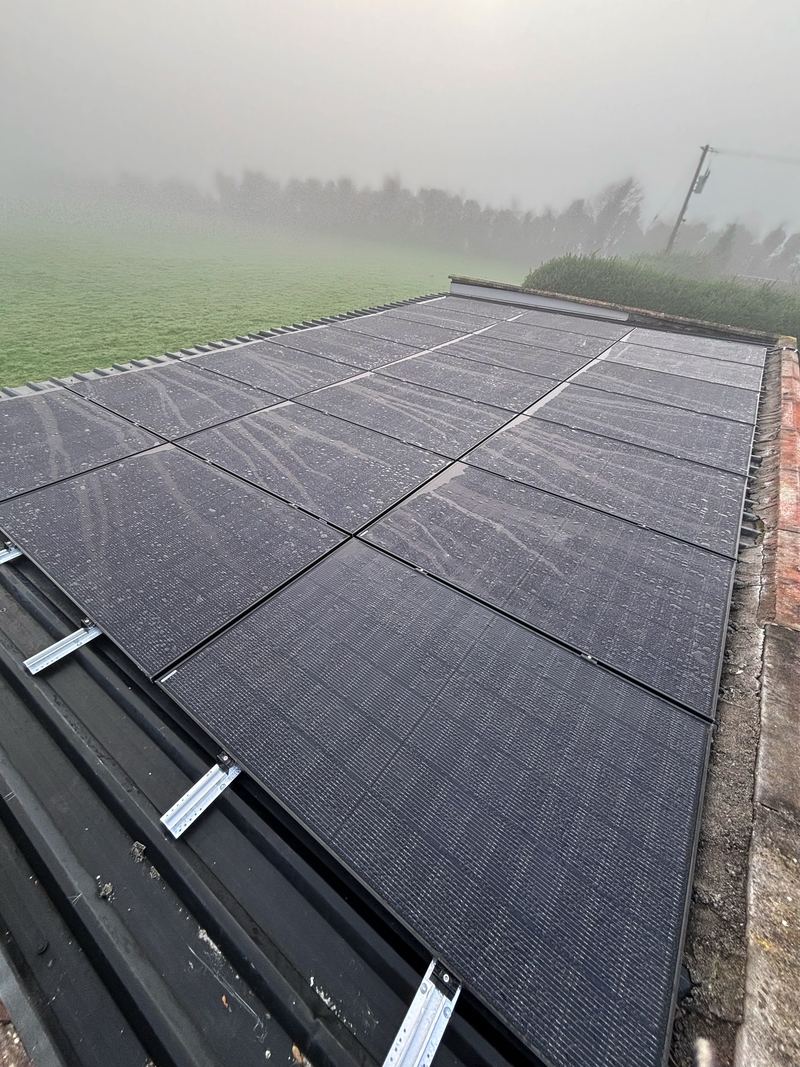
A high-irradiance county rewards you for not throwing the resource away. That is the whole case for ground mounting in Waterford. Roofs in the older parts of Waterford City, in Cappoquin and along the Tramore coast face wherever the street or the prevailing wind dictated, and a lot of them are pitched too shallow, broken up by dormers, or overlooked by a neighbouring chimney.
Putting the same panels on a frame at optimum pitch and true orientation typically returns 10 to 25 per cent more than a compromised roof. In a county already at the top of the national irradiation table, that margin compounds into real annual output rather than a rounding difference.
There are practical gains as well. No roof penetrations, no questions about rafter loading on a house built in the sixties, no scaffold hire, and any future panel swap or string test is done standing on the grass with a meter in your hand.
Blackwater alluvium, Comeragh sandstone and holding a frame down
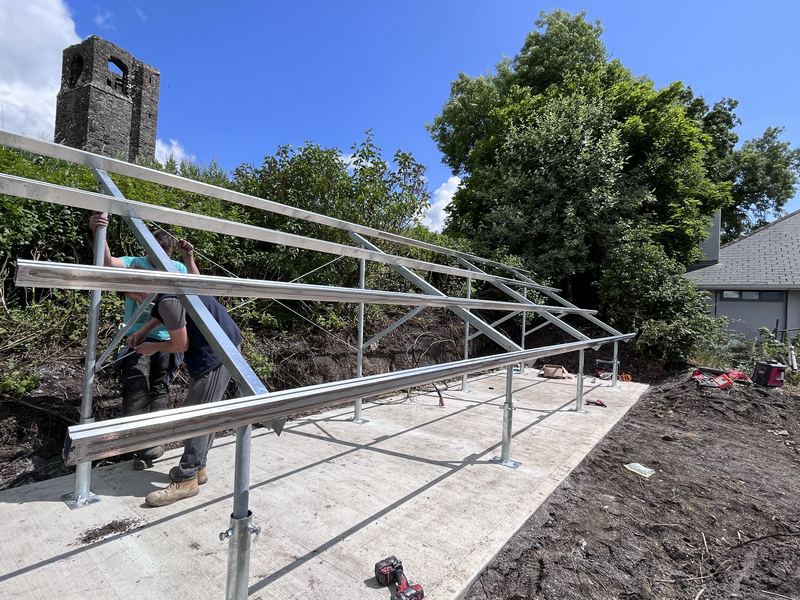
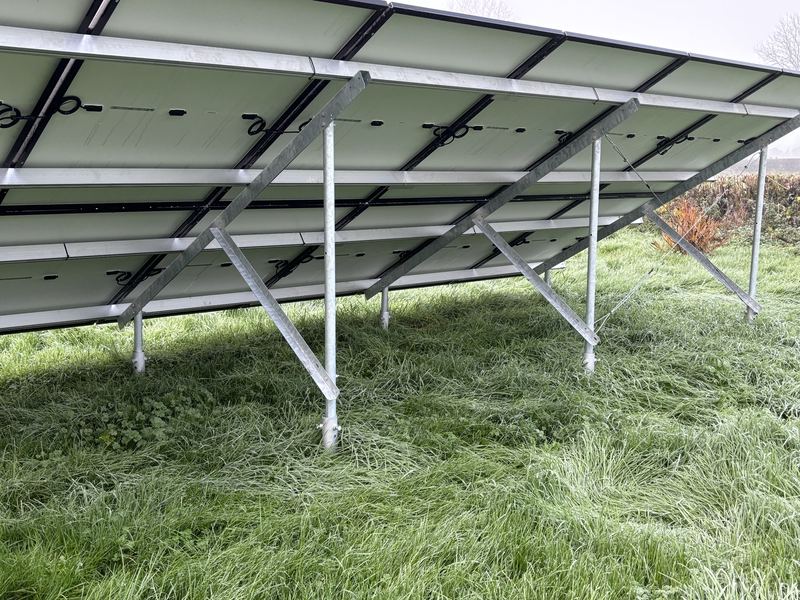
The Blackwater valley is genuinely good ground. Deep, fertile alluvial and brown earth soils give consistent resistance to a driving rig, so galvanised piles go in cleanly with no concrete, no spoil heap and no waiting for anything to cure. Most jobs around Lismore, Cappoquin and the tillage land north of Dungarvan are straightforward pile installations.
The Old Red Sandstone ridges are a different animal. On the Comeragh and Knockmealdown flanks, and on the shoulders where those ridges run out towards the coast, cover thins fast and rock turns up within the first half metre. That is a job for resin-set rock anchors drilled into sound stone, or for a ballasted frame where drilling is not appropriate.
Coastal sites from Tramore round to Ardmore get two extra considerations. The frame is specified to a higher wind terrain category, and fixings are upgraded for salt-laden air rather than using the inland standard.
Choosing a size, and what the grants cover
We size against how you actually use electricity, not against the size of your field. A household with an EV and a heat pump has a very different profile to a horticulture business running cold storage and grading lines through the day, and the second of those is common enough in this county to be worth planning around.
The SEAI grant is available for homes generally built and occupied before 2021, requires an SEAI-registered installer, and requires a post-works BER assessment once the system is commissioned. Its value is reviewed and stepped down periodically, so read the current rate directly on seai.ie. Whether a ground-mounted array qualifies on your specific property is something we confirm in writing before you commit to anything.
Farmers should look separately at the Solar Capital Investment Scheme under TAMS III, which offers a 60 per cent grant rate to eligible applicants under its own investment ceiling. Exported units are paid for under the Clean Export Guarantee, at rates that differ by supplier and change over time, and a micro-generation income tax exemption applies to that export income.
Planning, the council and what an install week looks like
S.I. 493 of 2022 broadly exempts free-standing arrays within the curtilage of a house from planning permission, in general subject to a 25 square metre aperture cap, a 2.5 metre height limit, a rule against siting the array forward of the front wall, and a limit on how much private open space it may cover. Protected structures, Architectural Conservation Areas and solar safeguarding zones near aerodromes fall outside that. Confirm your own case with Waterford City and County Council before ordering, and we will prepare the drawings for it.
Once that is settled, a typical install runs like this:
- site survey, probe holes, shading assessment and a firm layout
- foundations driven or anchored, usually inside one day on domestic work
- frame assembly, panel mounting and cable trenching back to the board
- inverter, isolation, earthing and commissioning, with the NC6 notification to ESB Networks
Micro-generation up to 6 kW single-phase or 11 kW three-phase goes through that NC6 route, typically cleared in a few weeks. Larger systems need a full connection application, which we manage on your behalf.
Towns and areas we cover in Waterford
We install right across the county, from Waterford City and Dungarvan out to Portlaw and every townland in between. There is no travel surcharge for being at the far end of the county.
Ground mounted solar in Waterford: your questions
How much sun does Waterford get compared with the rest of Ireland?
Waterford is among the top three counties in the state, with roughly 1,060 kWh per square metre of horizontal irradiation annually. In practical terms a correctly oriented ground mount here yields about 965 kWh per kWp per year, close to the ceiling of the roughly 850 to 1,000 kWh per kWp band seen across Irish installations.
What foundations suit the Blackwater valley?
Driven galvanised piles, in most cases. The deep alluvial and brown earth soils around Lismore, Cappoquin and Dungarvan give consistent driving resistance, which means no concrete and no curing delay. Where a site runs up onto the Comeragh or Knockmealdown sandstone and rock appears shallow, we switch to drilled rock anchors or a ballasted frame instead.
Who do I contact about planning permission?
Waterford City and County Council is the planning authority for both the city and the county. Most domestic ground mounts fall inside the exempted development limits set in 2022, but protected structures, Architectural Conservation Areas and aerodrome safeguarding zones are handled differently, so confirm your own position with the council before any equipment is ordered.
Do I need a battery with a ground mounted array?
Not necessarily. If most of your consumption happens during daylight, a battery adds less than people expect. If your household or business load is heavily evening-weighted, storage lets you keep units that would otherwise export at a lower rate. We look at your usage pattern and give you the honest answer either way.
What size array should I be looking at?
That comes from your annual consumption and your daytime usage split, not from available land. As a rough guide, panels commonly run 440 to 500 W, so a 6 kWp array is about 13 or 14 panels, and you should allow roughly 8 to 10 square metres of ground per kWp for a single row of frames.
How long does the work take on site?
For a domestic array, foundations are normally a single day in good Blackwater ground, with frame assembly, panel mounting, trenching and electrical work spread over the following day or two. Commissioning and the ESB Networks NC6 notification follow, and straightforward micro-generation notifications are typically processed within a few weeks.