Thirty kilometres separates the deep glacial gravels of the Curragh from the raised bog on the county's western fringe. One takes a driven pile like it was made for it. The other will swallow a post and give nothing back. That contrast is the whole story of ground-mounted solar in Kildare.
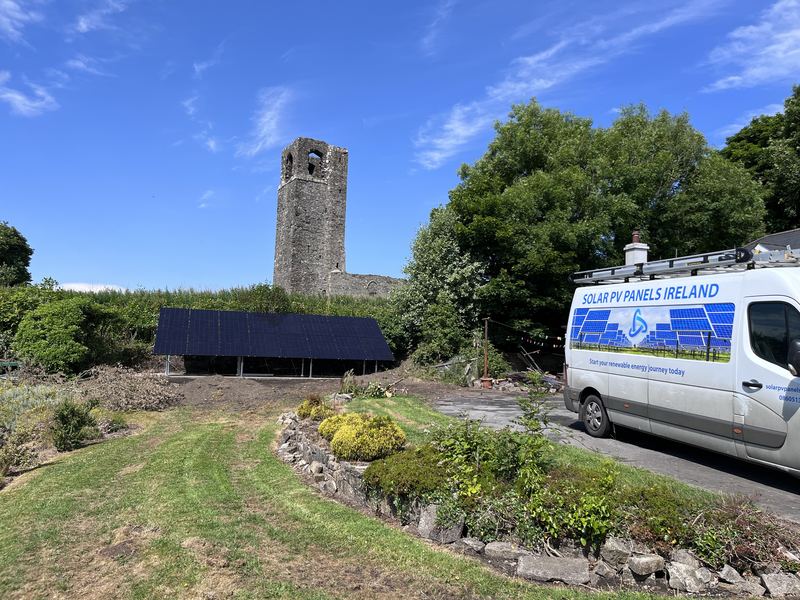
Add to that a county with a lot of the right sort of space. Half-acre and acre sites around Naas, Celbridge and Maynooth, stud farms with flat paddocks, and tillage ground with proper machinery access all suit a free-standing array far better than the roof of the house sitting on them.
Curragh gravel, boulder clay and the bog edge
The gravels along the eskers and across the Curragh are among the best foundations you could ask for. They are deep, free-draining and consistent, so a galvanised post drives fast, sits tight and needs no concrete. Boulder clay across the rest of the county behaves nearly as well, with predictable resistance and a stable water table.
Near the Bog of Allen the rules change completely. Peat depth has to be probed properly, not guessed from the surface, and a design that ignores it will settle. On that ground we work through the options in order:
- Driven piles where the probe finds firm mineral soil throughout
- Long ground screws where peat is shallow and firm material is reachable
- Ballasted frames on deeper peat or cutaway, taking stability from weight
- Spread footings where loads must be distributed over soft ground
The probe result also sets the price, since a rock-drilled or ballasted foundation costs more in labour and materials than a driven pile does. Settling that question before a quote is issued is the reason Kildare jobs rarely need a variation later.
Planning permission and Kildare County Council
Kildare County Council is your planning authority right across the county, from Athy up to Maynooth. For most homeowners the 2022 exempted development regulations, S.I. 493 of 2022, mean no application is needed at all, as long as the array stays inside the stated limits.
Broadly: 25 square metres of aperture on a house, an overall height held under 2.5 metres, no element of the frame standing forward of the front wall, and a ceiling on the share of private open space it takes. Protected structures and Architectural Conservation Areas fall outside the exemption and need their own treatment, and solar safeguarding zones around aerodromes carry additional restrictions worth checking on the Kildare and Dublin border. Confirm your own position with the council before you place an order.
Why Kildare sites suit a frame rather than a roof
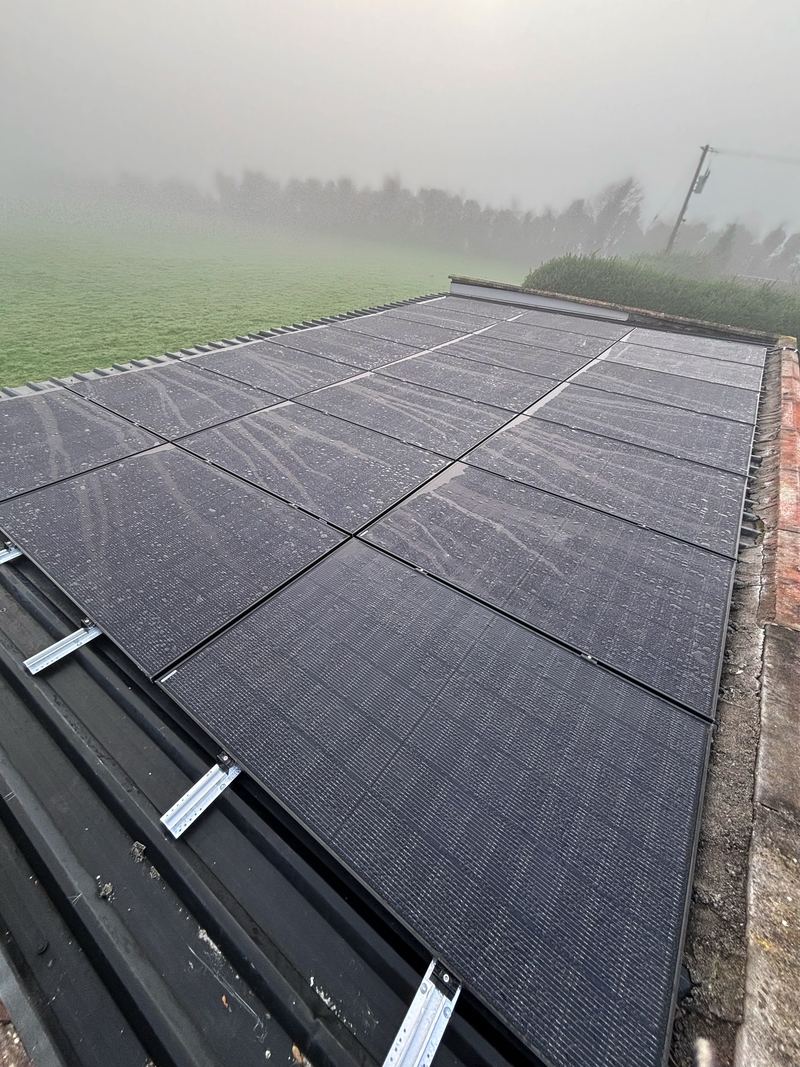
Commuter housing across the county tends to come with a big site and an awkward roof. Bungalows sit at whatever angle the site entrance dictated, dormers and rooflights break up the good slope, and half the estate faces east and west. Meanwhile there is a paddock or a lawn doing nothing at all.
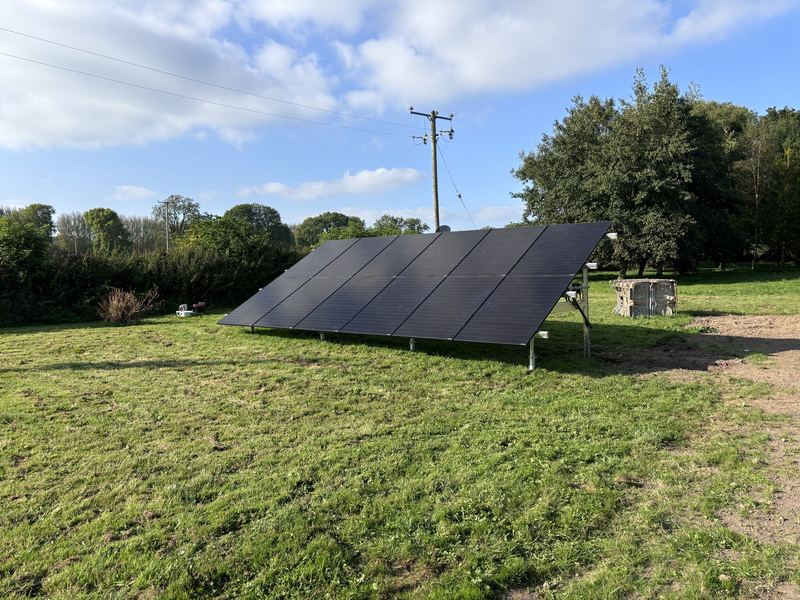
Put a frame at 30 to 35 degrees facing true south and the gain over identical modules on an awkward roof slope generally falls somewhere between 10 and 25 per cent. On bloodstock and tillage holdings the case is stronger again, since flat paddocks and headlands give clean access for the driving rig and put the array close to the load. Nothing is fixed to a roof, so nothing complicates a future re-roof or a shed extension.
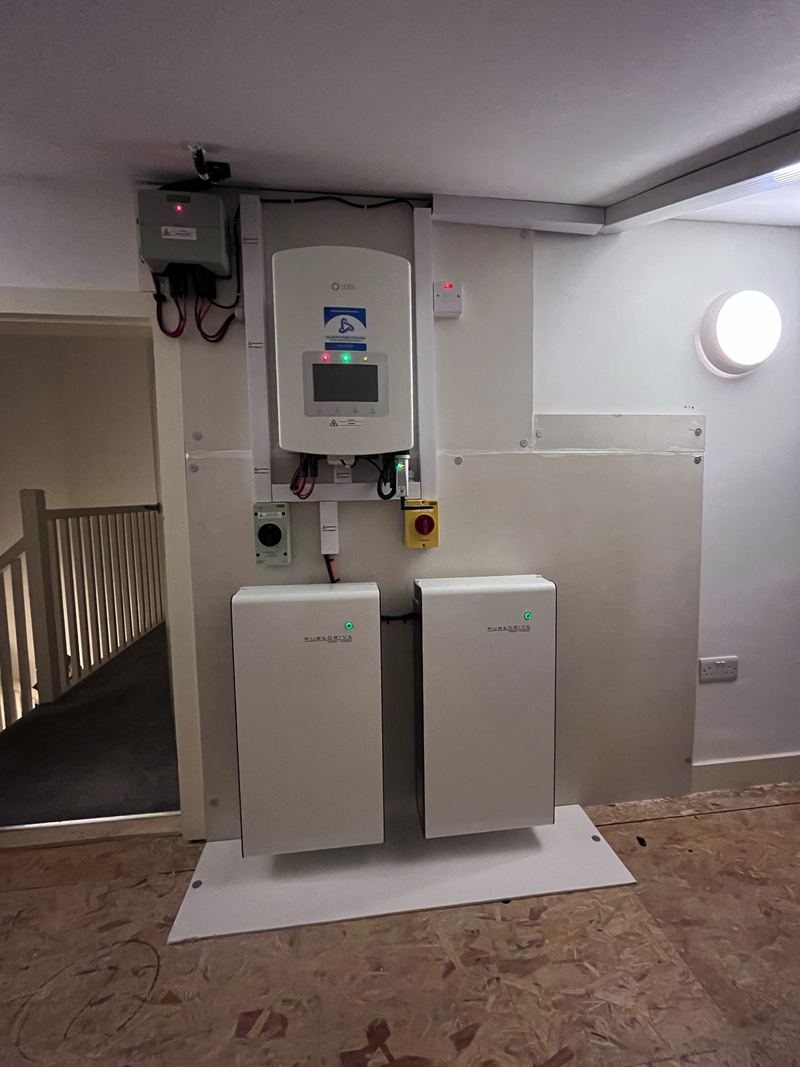
Battery storage suits the commuter pattern in this county particularly well. If a house is empty from eight in the morning until six in the evening, midday generation has nowhere useful to go unless it is stored or diverted into hot water. We size the inverter with that in mind, so adding storage later stays a simple job.
Yield, sizing and what you get paid
The county sees around 1,020 kWh of solar energy landing on each square metre annually, and a well-set ground mount here returns roughly 945 kWh per kWp per year. Measured against a national band running from about 850 up to 1,000 per kWp, that is a strong Leinster figure, helped by flat ground and open field patterns with little terrain shading.
Ten square metres per kWp is a safe planning figure for one row, eight where the layout is tight, and wider gaps again where a second row is needed. A 6 kWp array using 440 to 500 W panels comes to thirteen or fourteen modules. Exported units are paid for by your supplier under the Clean Export Guarantee. Each supplier sets its own rate and those rates move, so check what is on offer at the time you connect. There is also a micro-generation income tax exemption covering that income.
Survey, build and connection
A Kildare job begins with probing and a shading study. We check the ground across the whole array footprint, look at hedgerows and mature trees on the southern side, and measure the run back to the distribution board. Trenching across a gravel paddock is straightforward, and trenching across a stud gallop needs planning with the yard.
Build time on good ground is short. Posts go in, rails and panels follow, then the DC run, inverter, isolators and commissioning. Grid paperwork runs alongside the build. Domestic-scale systems are notified to ESB Networks, while the larger three-phase installations that suit a stud yard or a grain store need a full connection application and a longer lead time. Grants, if they apply, need the property confirmed as eligible before you commit, with current values taken from seai.ie.
Fencing is worth deciding early on paddock and farm sites. Horses will lean on anything left standing, so a stock-proof line around the array keeps both the frame and the animals out of trouble. On garden jobs that same attention goes into cable routing and a clean finish along the trench.
Towns and areas we cover in Kildare
We install right across the county, from Naas and Newbridge out to Kildare Town and every townland in between. There is no travel surcharge for being at the far end of the county.
Ground mounted solar in Kildare: your questions
Is the ground around the Curragh good for a ground mount?
It is excellent. Deep glacial gravel drains freely and gives consistent resistance, so galvanised posts drive quickly and hold firmly with no concrete required. That keeps both the install time and the disturbance down. The same applies along the eskers and across most of the boulder clay in the rest of the county.
What if my site is near the Bog of Allen?
Then it gets a proper peat probe before anything is priced. Depth varies field by field, and a frame designed for mineral soil will settle in peat. Depending on what we find, the answer is long ground screws, a ballasted frame, or spread footings that distribute the load. We survey across the footprint, not at one corner.
Do I need permission from Kildare County Council?
Usually not for a domestic array. Free-standing solar beside a dwelling is exempted development under the 2022 regulations once it respects the four conditions: 25 square metres of aperture, 2.5 metres of height, nothing in front of the building line, and a capped share of private open space. Confirm with Kildare County Council before ordering, particularly for a protected structure.
Can a stud farm or tillage holding get grant support?
Farming enterprises should look at TAMS III, where the Solar Capital Investment Scheme pays a 60 per cent grant rate and sits under an investment ceiling of its own. A dwelling on the same holding takes the SEAI route, which generally expects occupation before 2021, a registered contractor and a BER once the work is complete.
How much space does a 6 kWp array actually need?
About 50 to 60 square metres of ground in a single row, working from eight to ten square metres for each kWp. With 440 to 500 W panels that is thirteen or fourteen modules in one line. On most Naas or Newbridge sites of half an acre or more, it takes up less room than people expect.
How long does the grid connection side take?
A standard domestic array goes the NC6 route, which covers 6 kW single-phase and 11 kW on a three-phase supply, and we lodge it with ESB Networks on your behalf. Anything bigger becomes a full connection application, which typically adds a few weeks. Export metering is arranged after commissioning so payments can start.